


At Woodcroft Nursery your child will be greeted by our warm, welcoming and caring staff. We have a passion for children’s education and believe the experiences your child has in the Early Years sets the foundation for their future learning. In our Early Years setting, we strive to provide a vibrant, engaging environment to inspire children to play and learn. Our Early Years comprises of two classrooms, shared with our lovely Reception class and an amazing outdoor area!
MEET THE
EYFS Team

Mrs N. Whitehurst
Teaching & Learning Practioner

Miss C Machin
EYFS Lead and Reception Teacher
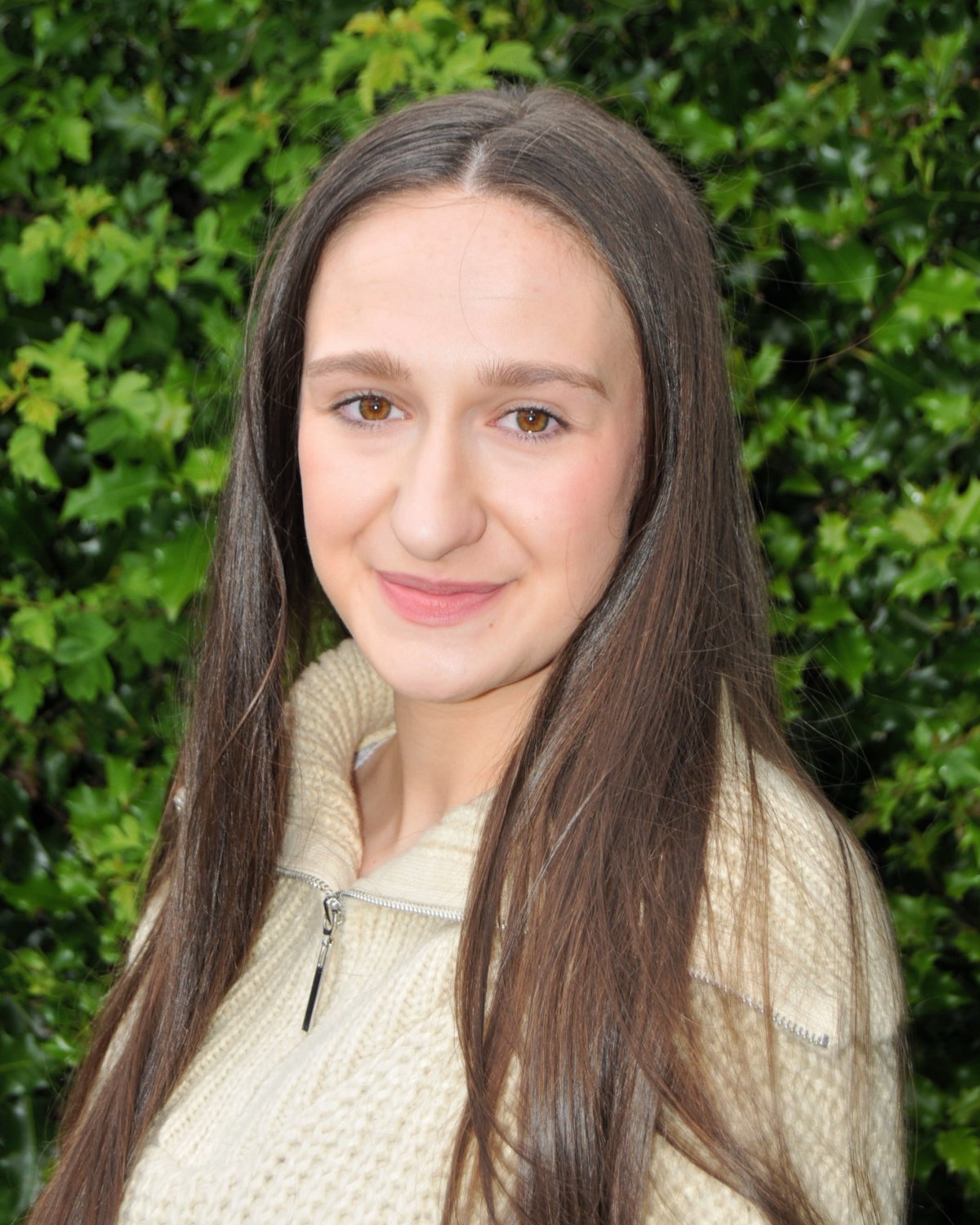
Miss B Hitchins
Early Years Assistant
Mrs N. Cope
Early Years Assistant

Mrs G Fleming-Hughes
Teaching & Learning Support Assistant
DISCOVER MORE
Learning
Alongside focused daily Phonics, Mathematics and literacy activities, staff plan play activities based on topics tailored to children’s interests. Our wonderful staff help to facilitate children while they play, helping them to learn whilst they play in a fun, engaging and supportive environment. We offer Forest School sessions as part of our weekly timetable to provide a wealth of outdoor learning opportunities such as den building, exploring the natural environment, discovering the world around them and learning how to safely use tools. Allowing them the freedom to be creative and use their imagination in a variety of ways in the outdoor environment, Forest School also encourages the development of spatial awareness and gross and fine motor skills. Forest School provides exposure to manageable risk, which teaches the children how to assess risk and tackle it safely.
READ ALL ABOUT
Prime Areas
What it means:
- Children learn to manage their emotions, form relationships, and develop self-confidence.
- They engage in activities that encourage sharing, taking turns, and showing empathy.
Characteristics of Effective Learning:
- Playing and exploring: Actively engaging in activities that require social interactions, such as role-play or collaborative games.
- Active learning: Developing a sense of self-esteem when achieving personal goals or overcoming challenges with peers.
- Creating and thinking critically: Children are encouraged to reflect on their feelings and the emotions of others, fostering emotional regulation.
What our environment promotes:
- A warm, nurturing environment with clear, consistent routines.
- Opportunities for children to interact in group settings.
- Materials and activities that encourage turn-taking and sharing (e.g., group activities, team games).
What it means:
- Children develop the ability to listen, understand, and communicate effectively.
- Activities that promote listening, speaking, and interaction are integral.
Characteristics of Effective Learning:
- Playing and exploring: Children engage in conversations during play, ask questions, and experiment with new vocabulary.
- Active learning: Listening to stories, instructions, and responding thoughtfully in conversations.
- Creating and thinking critically: Thinking through stories, using language to explain ideas, and asking “how” and “why” questions.
What our environment promotes:
- Storytelling areas, books, and songs to encourage language use.
- Puzzles and games within our continuous provision to encourage turn taking, problem solving and discussion.
- Curiosity cubes and investigation stations to encourage speculations, discussion and debate.
- Language-rich environments with visuals, posters, and prompts to spark dialogue.
What it means:
- Children develop both fine and gross motor skills.
- They practice coordination, balance, and strength through active play and hands-on activities.
Characteristics of Effective Learning:
- Playing and exploring: Physical activities where children experiment with movement, such as climbing, balancing, or drawing.
- Active learning: Taking part in physical challenges, building confidence in their abilities.
- Creating and thinking critically: Problem-solving through physical tasks (e.g., figuring out how to build a structure or use a tool).
What our environment promotes:
- A variety of equipment for both indoor and outdoor physical play.
- Planned for PE sessions at least once per week for all nursery and reception children.
- Space for large motor activities, such as running and jumping, as well as areas for fine motor tasks (e.g., threading beads, drawing, cutting).
- Safety measures and adult guidance to encourage risk-taking in a controlled environment.
What it means:
- Children are encouraged to explore reading and writing through engaging, purposeful activities.
- They begin to recognize letters, sounds, and words, progressing towards early writing and reading comprehension.
Characteristics of Effective Learning:
- Playing and exploring: Actively using books and other resources to explore letters and sounds.
- Active learning: Writing for different purposes (e.g., lists, drawings with labels); daily phonics and handwriting lessons.
- Creating and thinking critically: Making up stories, exploring patterns in print, phonics based games for at school and at home and experimenting with writing.
What our environment promotes:
- A print-rich environment with labelled items, storybooks, and access to writing tools.
- Quiet reading corners and ‘secret reader’ visitors encourage listening and early comprehension.
- Opportunities for children to “write” (e.g., chalkboards, whiteboards, scribbling with pens).
- Daily phonics lessons using our ‘bug club’ phonics scheme
- Phonics accessibility for children through the active learning app for use at home and in school.
What it means:
- Children are encouraged to develop an understanding of numbers, shapes, space, and measure through practical activities.
- Mathematical thinking emerges through counting, sorting, and exploring concepts such as size and patterns.
Characteristics of Effective Learning:
- Playing and exploring: Investigating shapes, numbers, and patterns in the environment.
- Active learning: Using objects (blocks, beads, counters) to count, sort, and explore mathematical concepts; mastery number sessions on top of planned and sequential maths lessons for all nursery and reception children.
- Creating and thinking critically: Solving simple mathematical problems during play (e.g., counting toys, measuring ingredients in a play kitchen).
What our environment promotes:
- Maths areas in both classrooms with open opportunity for children to explore maths.
- Maths woven throughout our environment from labels to outdoors to displays.
- Materials for sorting, matching, counting, and building (e.g., blocks, number cards, measuring cups).
- Activities that involve shapes, patterns, and numbers in real-world contexts.
- Opportunities to practice measuring, comparing, and estimating through hands-on tasks.
What it means:
- Children explore their surroundings, gaining knowledge about the world around them (people, places, technology, and the natural world).
- Curiosity is key, encouraging children to ask questions and explore how things work.
Characteristics of Effective Learning:
- Playing and exploring: Investigating objects, materials, and environments; themed provision enhancements for children to explore and celebrate.
- Active learning: Taking part in projects or activities that involve discovery (e.g., observing animals, planting seeds); weekly planned forestry sessions and daily outdoor exploration time; celebrations taught and embedded through themed enhancements to continuous provision; out of school visits and visitors into school for real life experiences.
- Creating and thinking critically: Discussing and reflecting on their experiences and the changes they observe in the world; investigating, comparing and discussing objects and artefacts.
What our environment promotes:
- Access to natural resources – we have a huge forestry area, playing field and outdoor space for children to explore, investigate and observe.
- Opportunities for exploration, curiosity development and investigation both inside and outside the classroom (investigation stations, curiosity cubes, natural materials, out of school visits and specialist visitors.)
- Technology or tools that children can use to learn more about the world are a part of our provision.
What it means:
- Children develop their imagination and creativity through music, art, dance, and role-play.
- They have opportunities to express their feelings, ideas, and experiences in a variety of creative forms.
Characteristics of Effective Learning:
- Playing and exploring: Engaging in artistic activities like painting, drawing, or role-play.
- Active learning: Developing confidence as they create and explore different media (e.g., clay, paint).
- Creating and thinking critically: Thinking about their creations and reflecting on the process of making something new.
What our environment promotes:
- Art and craft materials (e.g., paints, paper, fabric) that encourage creativity readily available for children to choose and select from.
- A performance area for role-playing, singing, or dancing in our outdoor area.
- A home corner that changes with the children and their learning.
- Junk modelling areas for children to explore the beginnings of design and technology skills.
VIEW OUR
KEY LINKS & DOCUMENTS
VIEW OUR
Admissions Information
Our nursery setting is open Monday to Friday during term time, providing a full and busy curriculum for children aged between 3 and 4 years old. We manage our own waiting list, so if you would like to register your interest before your child turns 3, we will happily add them to our list. If you would like to apply for a nursery place for your child please contact the school office on 01538 714796 or woodcroftoffice@sbmat.org. We will arrange for a welcome pack to be sent out to you which will include further information on our Nursery setting. When your child turns 3 and is due to start in Nursery we will send the relevant forms and arrange a home visit as part of our induction process. During this visit, our staff will talk to you and make arrangements for your child to begin their bespoke transition into our nursery setting.
We offer provision for children from their 3rd birthday. Alongside funded places we also offer additional paid sessions which can be booked subject to availability. Please see below for further information.
We can offer provision for your child, 5 days per week from 7.30am until 6.00pm during term time. We are lucky enough to have Ministry 4 Sport who specialise in running sports and care clubs. To find out more head to our Treehouse Before & After School Club page.
All children are entitled to 15 hours of funded Nursery provision from the term AFTER their 3rd birthday. In addition, parents may be eligible for an additional 15 hours of funded Nursery provision.
Click on this link to check your eligibility for 30 hours funding.
Help Paying For Your Childcare – Click here to visit the Childcare Choices website.
If your child was born between
1st April – 31st August
Your child’s funded place can begin on
1st September (Autumn Term)
If your child was born between
1st September – 31st December
Your child’s funded place can begin on
1st January (Spring Term)
If your child was born between
1st January – 31st March
Your child’s funded place can begin on
1st April (Summer Term)
We do accept Think 2 funding, please contact the school office for more information.
The following links provide additional information.